What is Meteor Scatter and how do Amateur Radio operators
use this mode of Radio Wave Propagation to communicate?
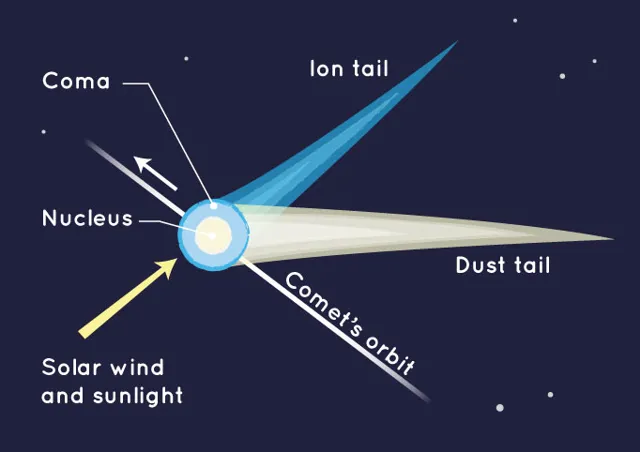
Well, when a Celestial body such as a Comet or Asteroid
passes the Sun, parts of the Comet are essentially burnt off or in a Comets
case, the ice forming the tail of the Comet is vaporised releasing debris
behind it and when Earth passes through this debris field, these small pieces
of space rock enter out atmosphere at fairly high speed and burn up on entry
emitting a bright light, creating what we refer to as a "shooting
star".
Astronomers and Photographers alike capture this light show
and produce some amazing images, but what does this space phenomenon have to do
with Amateur Radio?
When the Meteoroid burns up in the Earth’s atmosphere, light
and heat aren't the only things generated creating the Meteor (Meteor meaning
the Meteoroid going through the burn-up process as it fly's through the earth’s
atmosphere at high speed), the process also creates an Electron dense trail
which energises or charges a small region of the earths Ionosphere known as the
E-Layer which as we know, is capable of reflecting VHF Radio signals.
There are decades of research going into the science behind
this, however here we'll keep it basic - The link below is to a paper
from Nishi-Harima Astronomical Observatory in Japan, going into some
detail on Meteor Scattering of RF signals.
Credit and Source:
Kazuhiro SUZUKI and Yasuo KATOH
Centre for Astronomy, University of Hyogo.
Image showing a detailed view of a Meteor, notice the shape of the head a tail as it passes through the atmosphere.

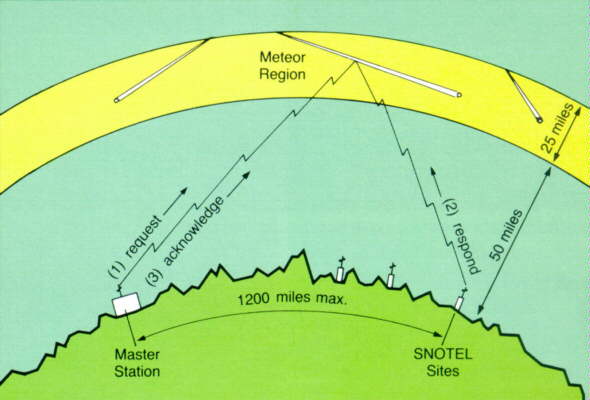
Meteoroids can range anywhere in size from a grain of sand to large rocks, so depending on the size of the rock burning up on entry into the Earths atmosphere, you could have an ionised segment of the Ionosphere that could last anywhere from a few milliseconds to several minutes allowing for Radio Communication on VHF Bands like 2 Metres 144MHz over several hundred, or even a couple of thousand KM where normal terrestrial communications at these frequencies wouldn't be possible, but in this case the Meteor has made it possible by way of the Ionising process, reflecting or bouncing the signal back creating a "Skip Zone" - See the image below, visualising this.
A few things are at play here, it’s not just a simple
reflection from the E layer, we've got to deal with changes in polarisation and
also Doppler Shift, as an example, when we hear a Police Car siren, as the car
comes closer we hear the siren at a fairly high frequency and as it passes us
at speed, we note a change in frequency of the siren as it goes lower in
frequency - This is Doppler Shift and a similar effect happens with Meteor
trails in the atmosphere, when the RF signal is reflected off the Meteor head
or tail, the Frequency will shift high or low depending on the velocity and
direction of the Meteor, so essential the Doppler Shift is a function of the
Meteor size, direction and speed.
As a rule, Amateur Radio Operators use horizontal antenna polarisation as a
standard on VHF bands such as 2M, 144MHz but this polarisation can change on a
reflected VHF signal, when a signal is reflected or more accurately it is
"refracted" as the signal bends through the E layer inside the
Ionosphere, however although the signal arrives at the E layer horizontally
polarised, sometimes it may flip polarisation to a vertical plane by a factor
of 90 degrees.
This is known as Faraday Rotation and it’s something we have no control over,
once the signal is refracted from the E layer, it may arrive at the receiving
station in either horizontal or vertical polarisation which may result in
attenuation of the received signal due to the difference in polarisation on the
receiver antenna - We know that attenuation between a vertically polarised
signal and a horizontally polarised signal can be in the region of 20dB for a
90 degree difference in polarisation.
This Doppler Shift can be seen when working an MS QSO, let’s assume both
stations are using the Icom IC-9700 and are fairly accurate in terms of
frequency stability and are transmitting and receiving on 144.370MHz using the
FSK441 Mode in WSJT or MSHV Software, in the message window where we can decode
data from Meteor reflections there's a column titled "DF", see the
image below for an example, the DF column indicates the frequency difference
between the transmitted signal and received signal - Now this doesn't mean that
one operators radio is off frequency, we've assumed in this example that both radios
are tuned withing a few tens of Hz accuracy.


In the example QSO detailed in the images above, we can
there is a slight variation in the DF column in MSHV Software, this can be the
difference between the two radio's, granted each radio isn't going to be identical,
however this difference is mostly due to the Doppler Shift.
If you watch the short video clip taken during the peak of the Geminids Meteor
Shower in December 2024, you'll see and hear a received burst of data from
9A7BKU in Croatia, created by a Meteor which is quite spectacular.
The data modes used in the software such as MSHV and WSJT are designed to
handle the Doppler Shift otherwise decoding a ping or burst of data from the
Meteor reflection would be impossible, a better example to visualise the Doppler
effects would be to listen to Graves Radar Station in France, this can be done
using your existing 2M Yagi and a receiver capable of tuning to 143MHz,
something like a low cost SDR Radio will do the job nicely - More details on
this will be given in a different article.
Prior to the advancement in Computer software, in the 1960's and 1970's, Meteor Scatter was possible
using CW or Morse Code sent at high speed, the operator would pre-record CW strings of messages on a high-speed CW Electronic keyer and send this pre-recorded Morse Code, the reverse was done by the receiving station by recording the high speed CW pings/reflections and then playing it back at low speed on the
tape deck thus decoding the Morse Code and progressing through the MS QSO like
this - Much more challenging and required a higher level of skill than required
today.
During a major shower like the Geminids, it is also possible to use SSB because
the reflections are more frequent and more intense, personally I've never tried
this but it would be more successful on the lower VHF Bands for reasons I'll
describe later on in this article.
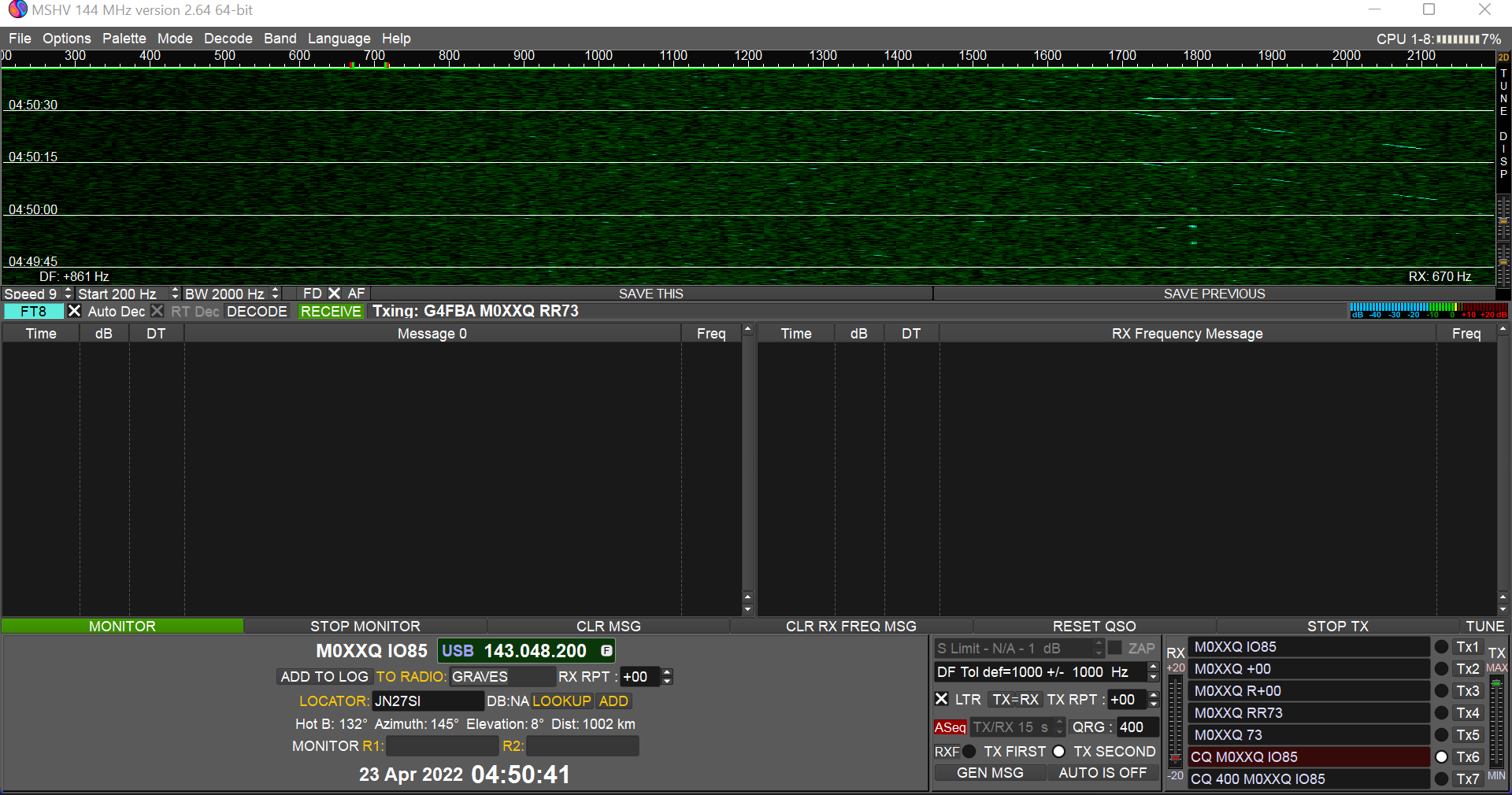
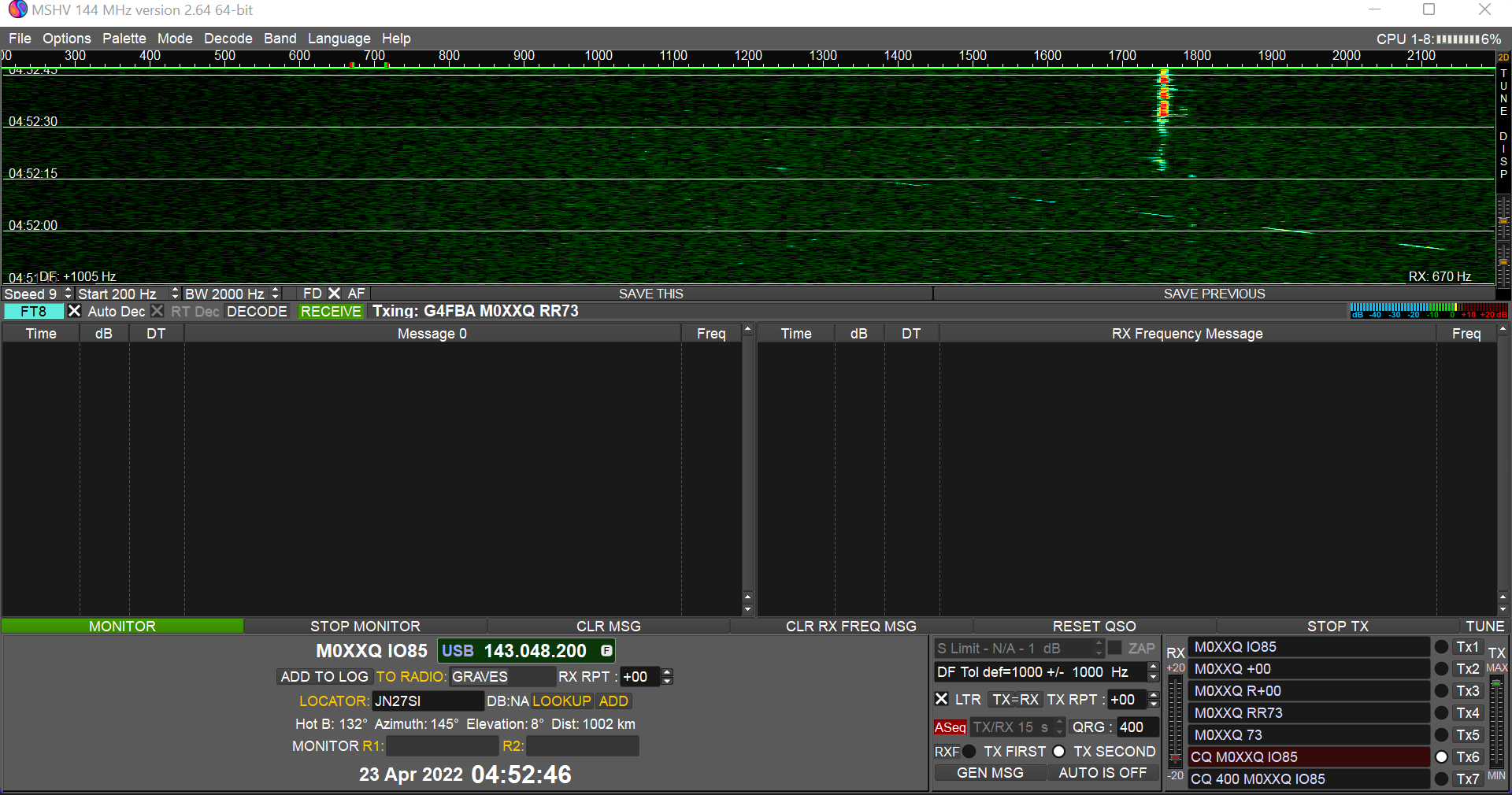
In the images below we can see the Graves Radar reflections from a Meteor, but
more noticeable we can see the slant in the frequency as the Meteor burns up at
high velocity in the atmosphere creating the Doppler Shift.
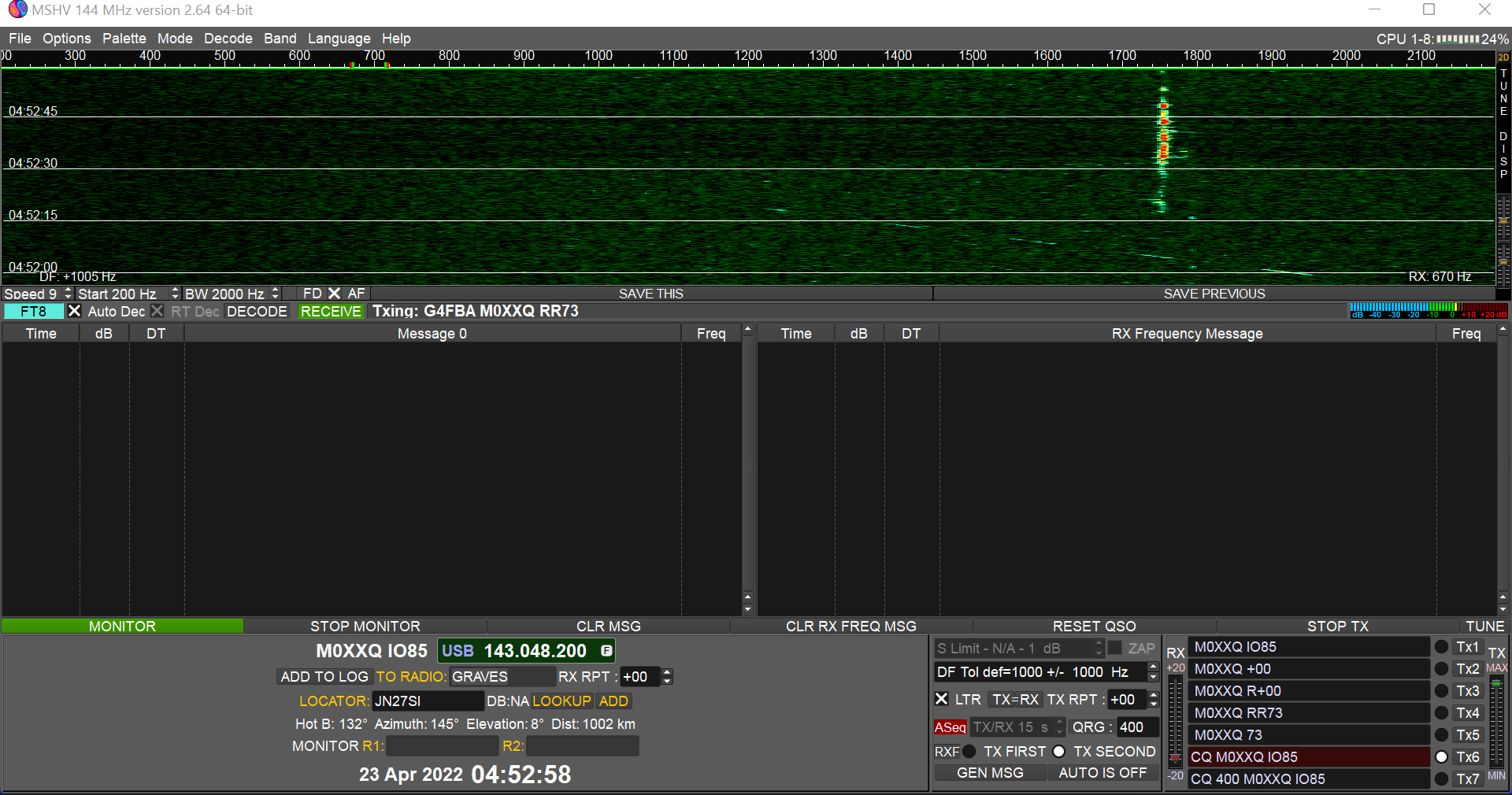
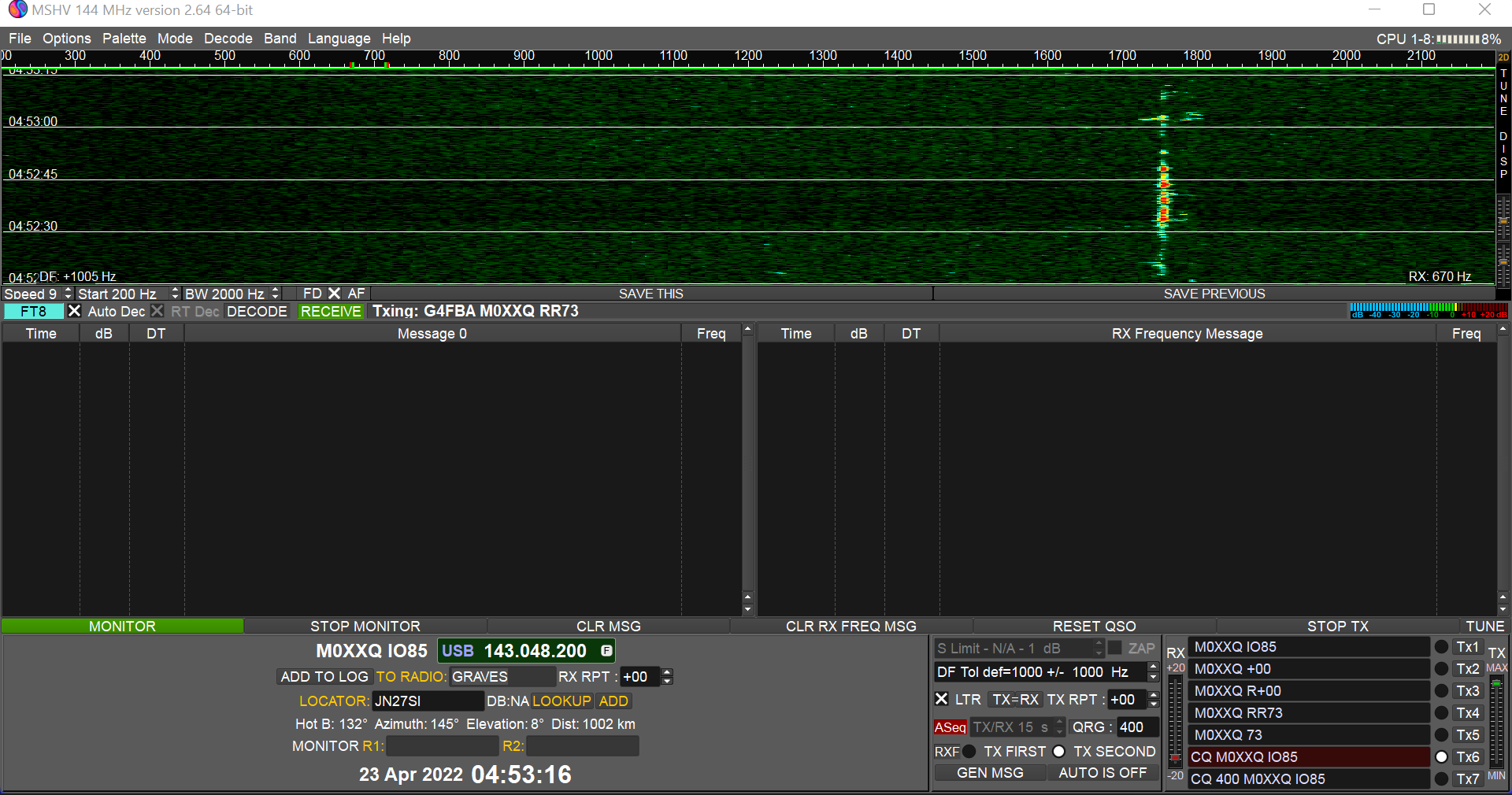
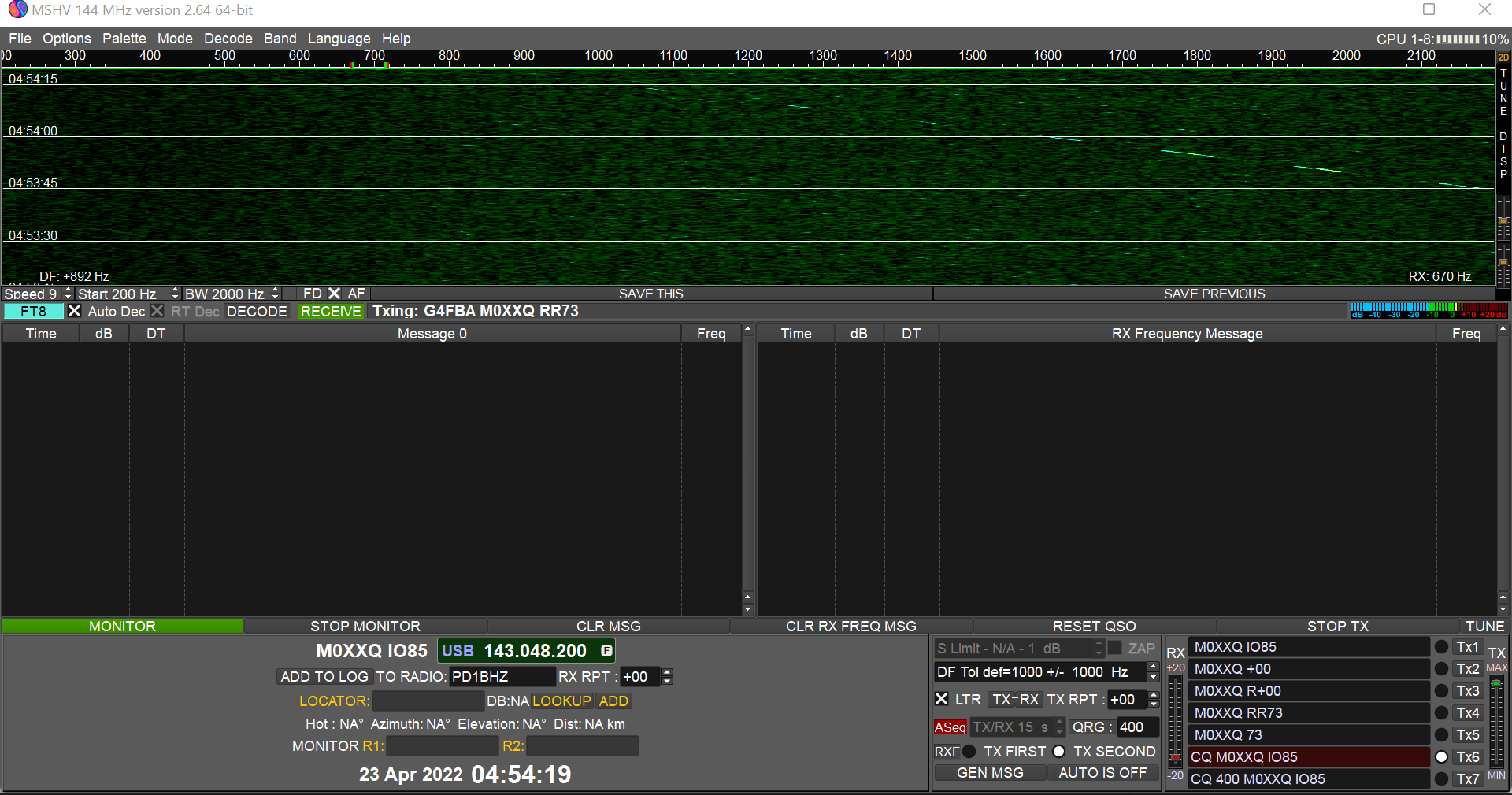
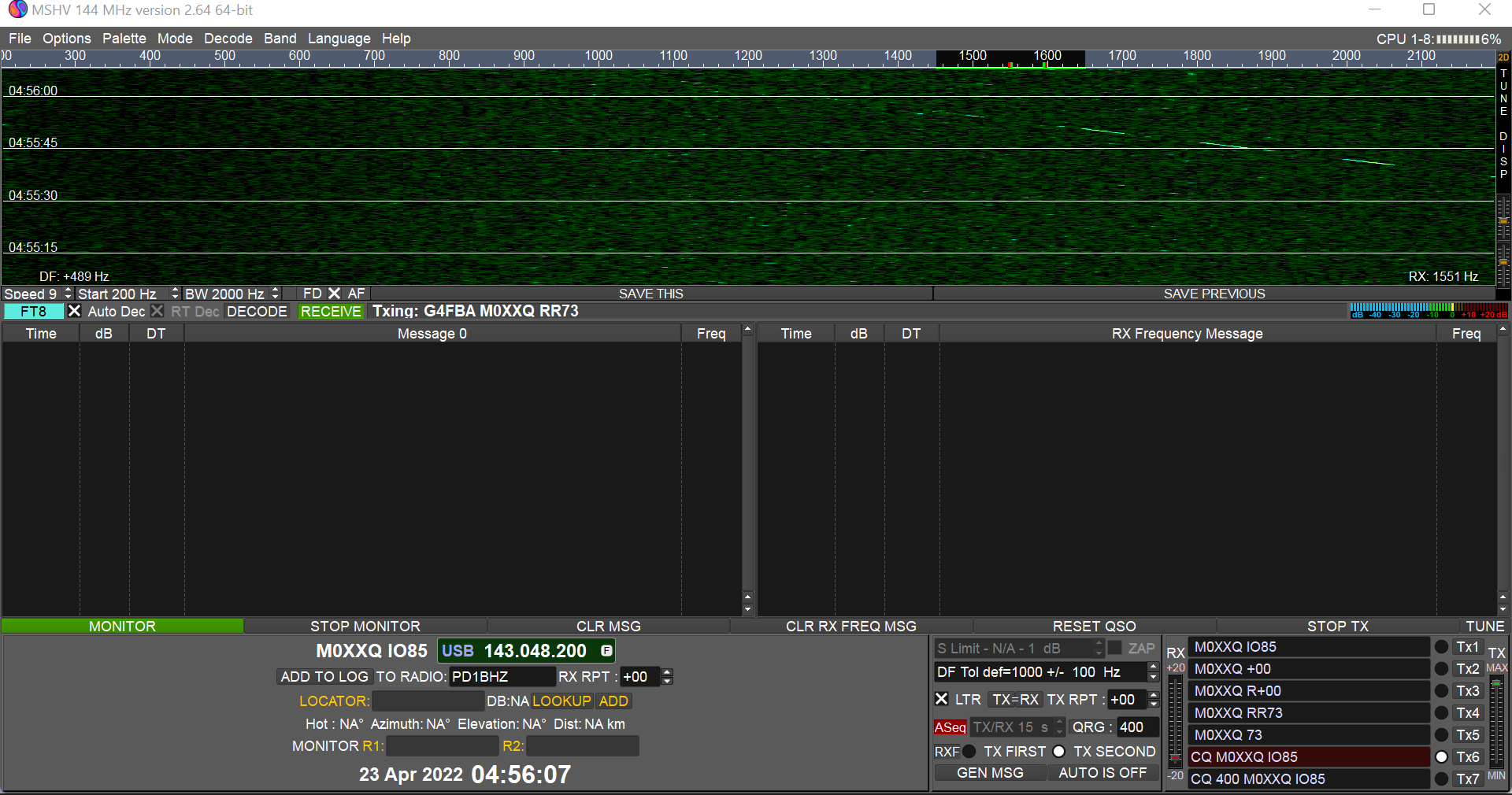
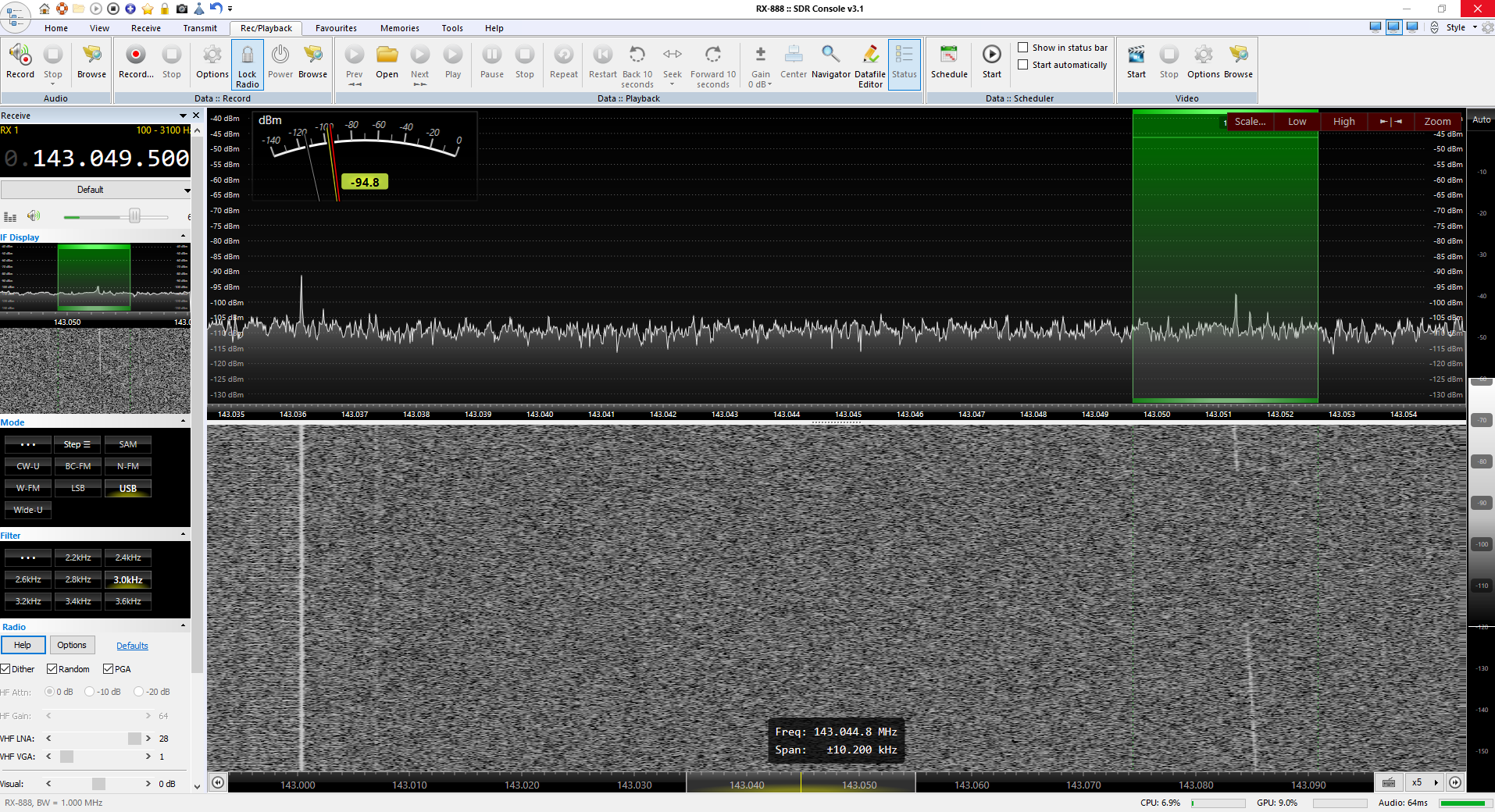
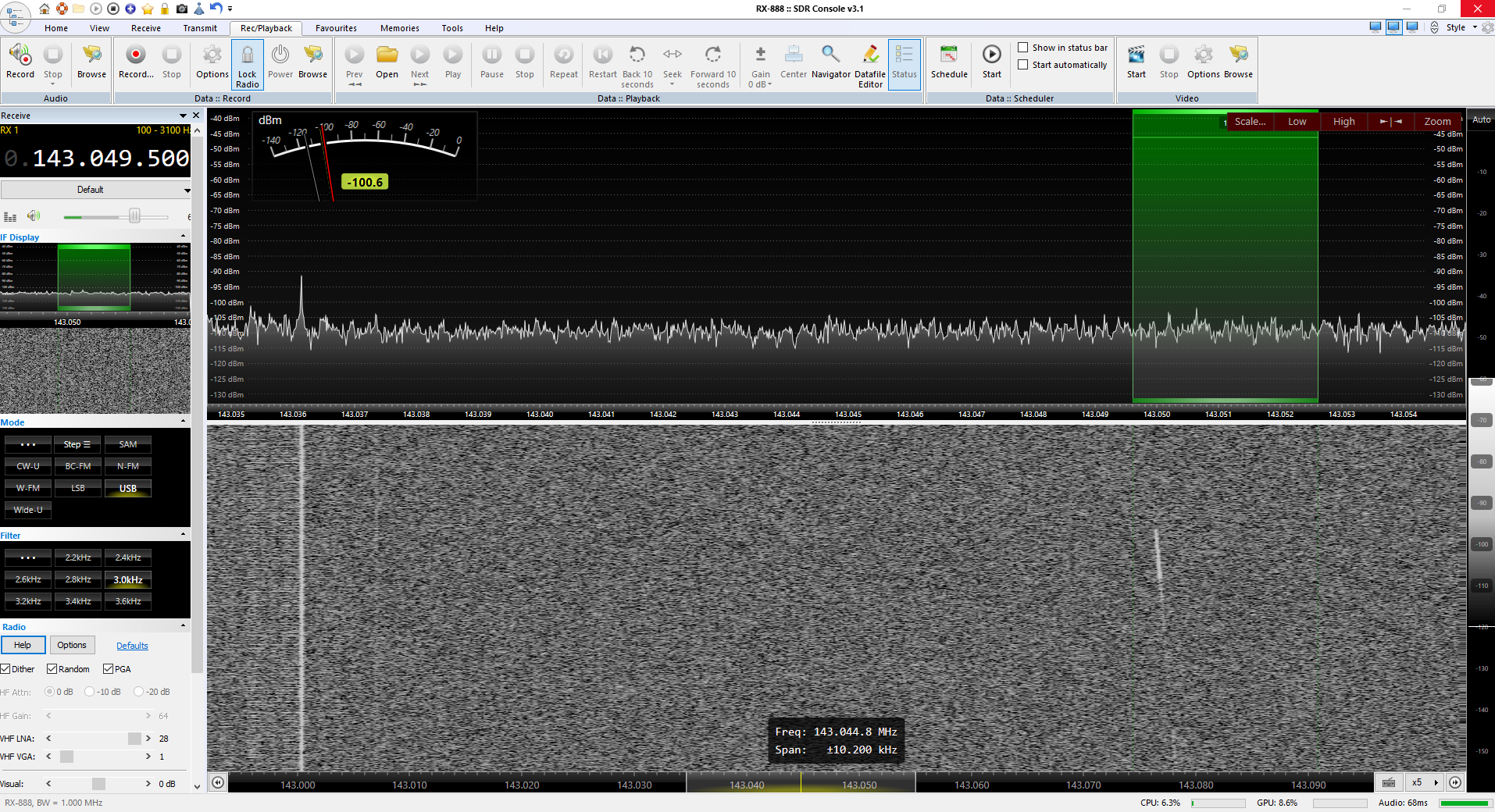
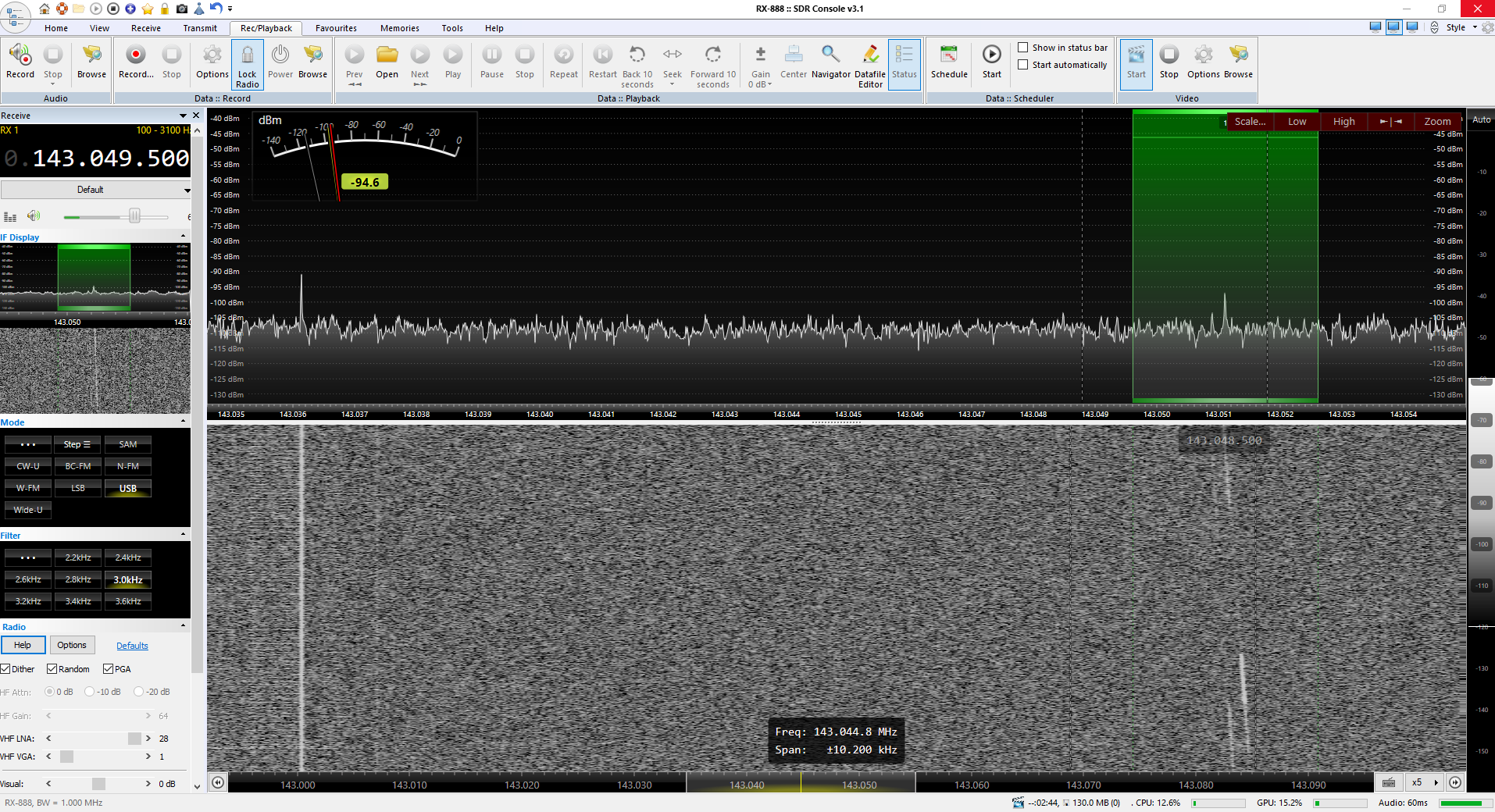
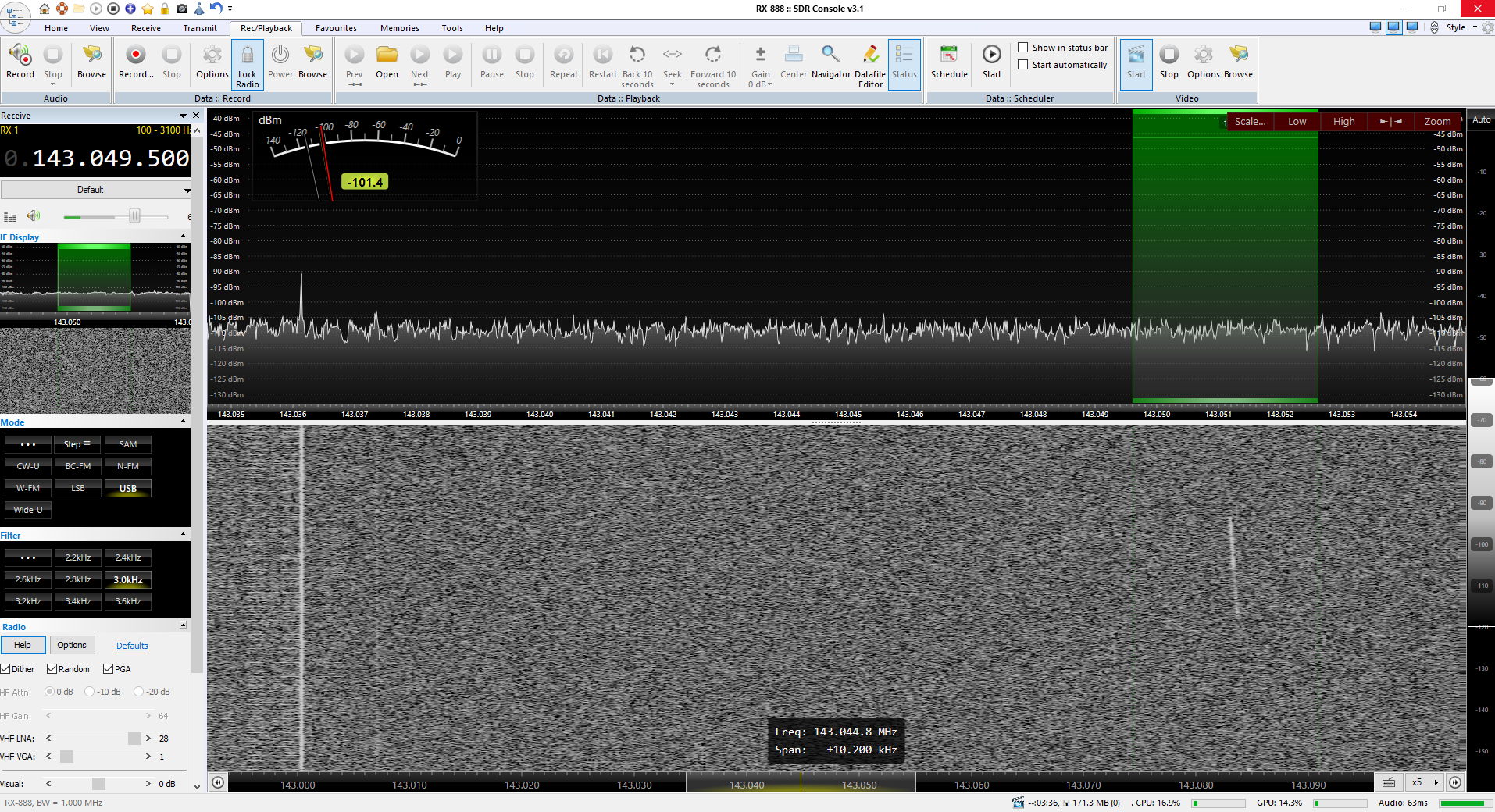

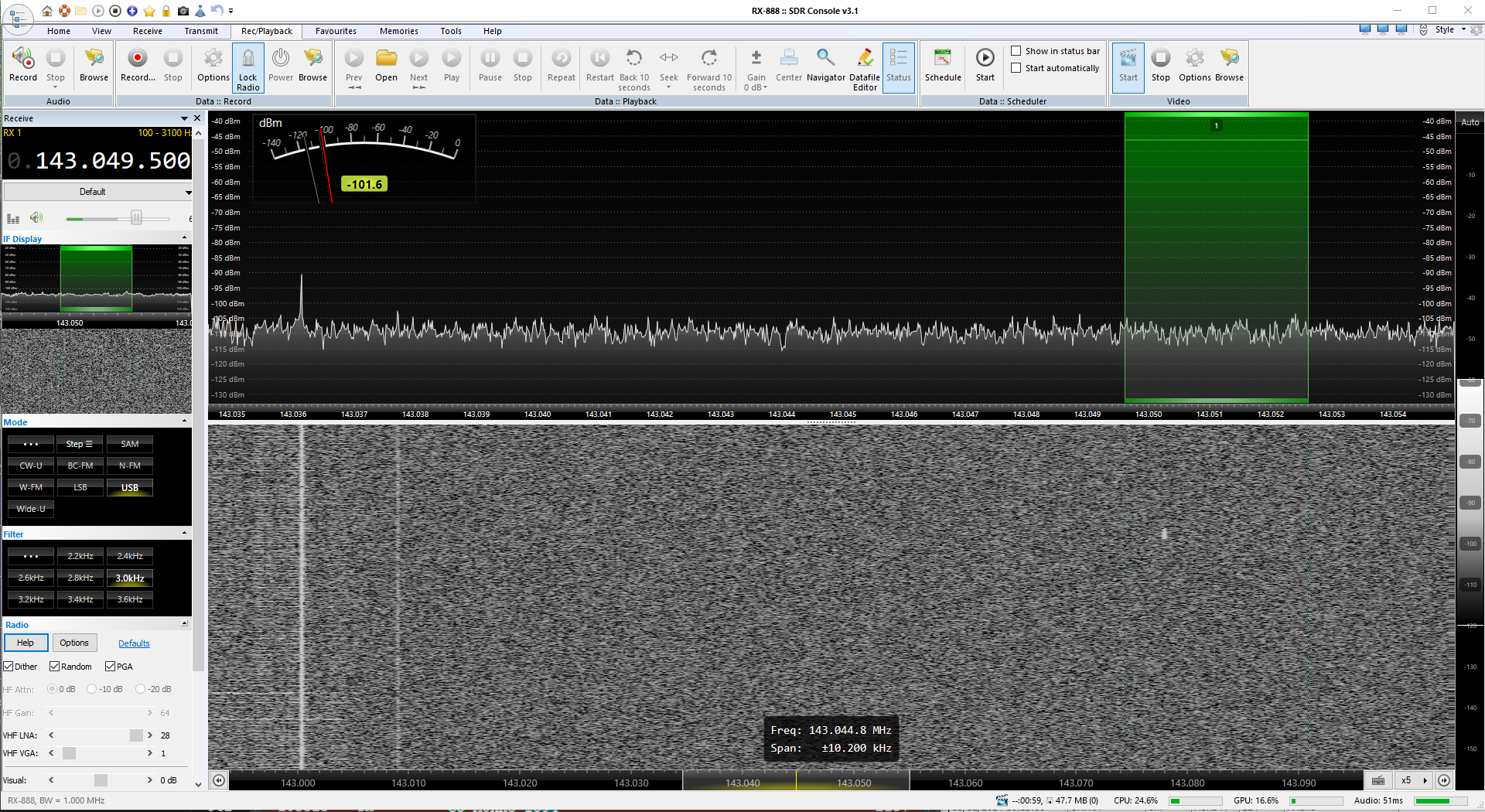


Check out the video below showing a fairly long MS burst from Graves Radar and a snip of the Doppler effect.
That was a short, condensed overview about Meteor Scatter
and its role and relevance in Amateur Radio, the following article goes on in
more detail and specific topics on equipment, operating procedure and the
frequencies/bands best suited for MS operating.